The Environments
Different from each other but equally evocative, the rooms that make up the Fegotto tell a story of industriousness and functional and aesthetic organization of space.
Not surprisingly, in recent decades they have been repeatedly chosen as sets for film and television. To mention only the best known, Roberto Faenza’s masterpieces Marianna Ucrìa and I Viceré and several episodes of the series Il Commissario Montalbano were filmed at Villa Fegotto.
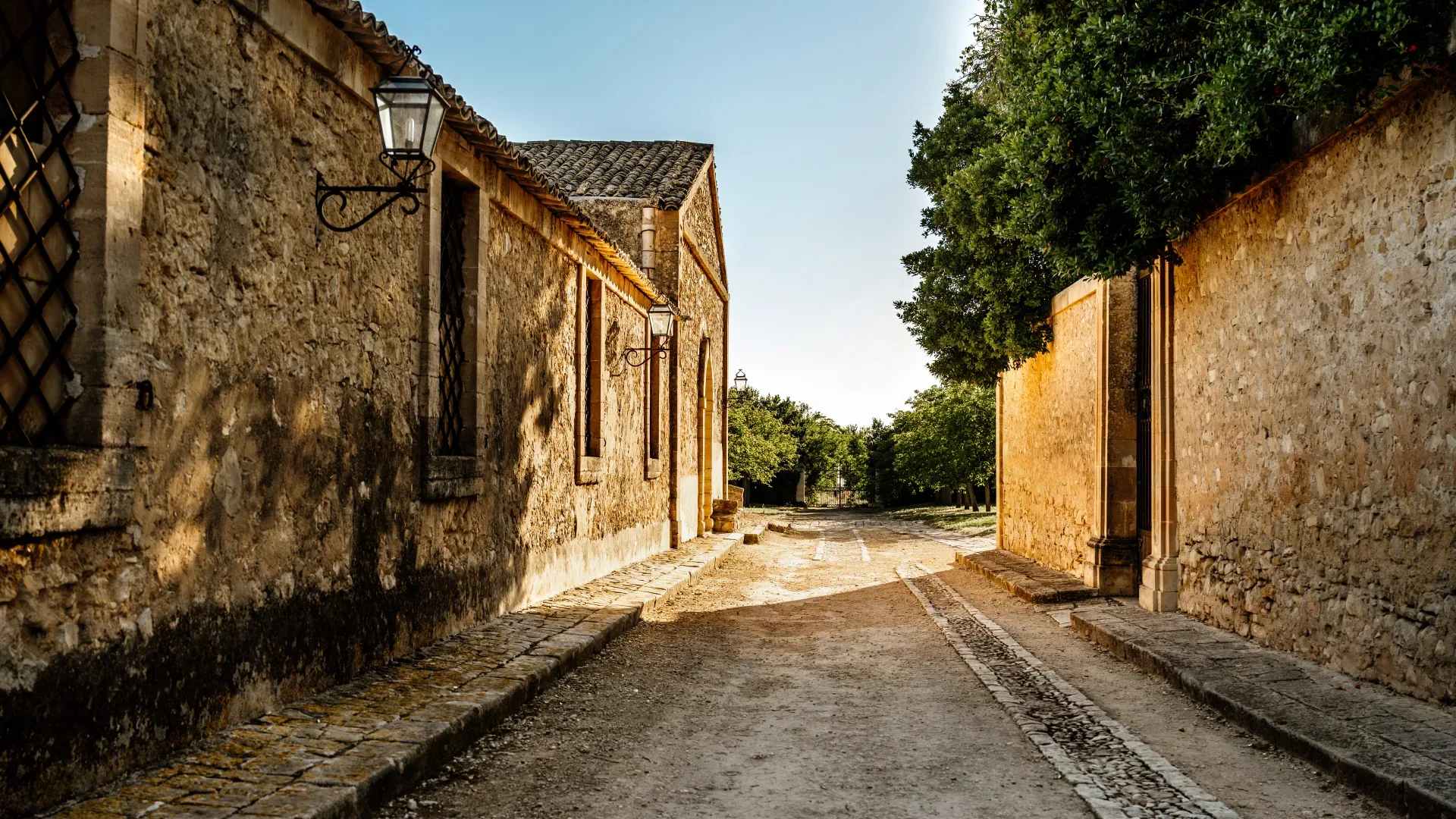
Palmento and Cellar
The palmento-cellar complex represents a unicum in size, functionality and scenic effect.
Developed on several levels, it housed all stages of wine production, which was then shipped from the nearby port of Scoglitti to the Florios, to Marsala, or to Naples and other Italian ports.
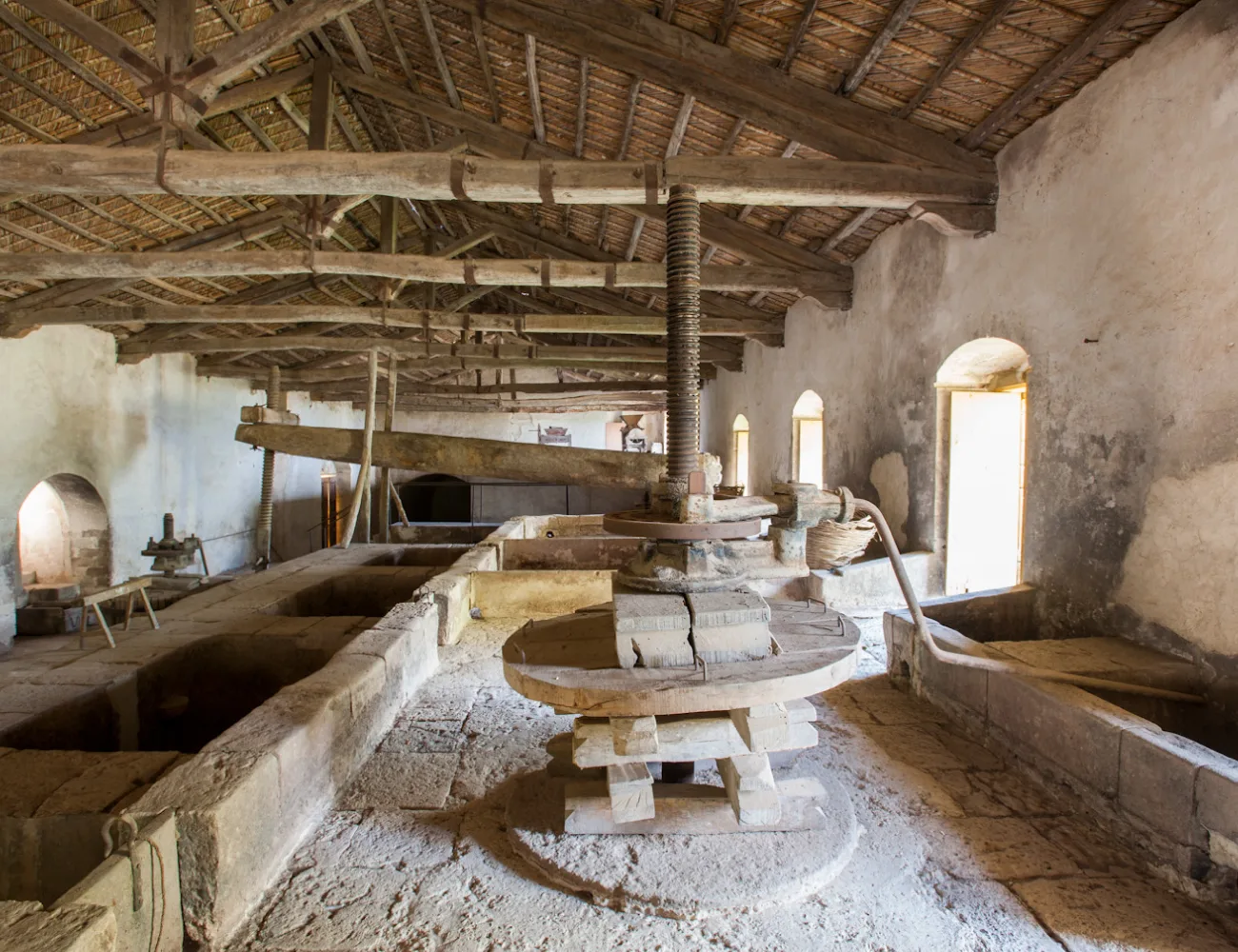
Inside the palmento, the cianca, the large press made from a single forked pine tree trunk, is the backdrop for the pestatojo for crushing the grapes and the five tanks for fermenting the must.
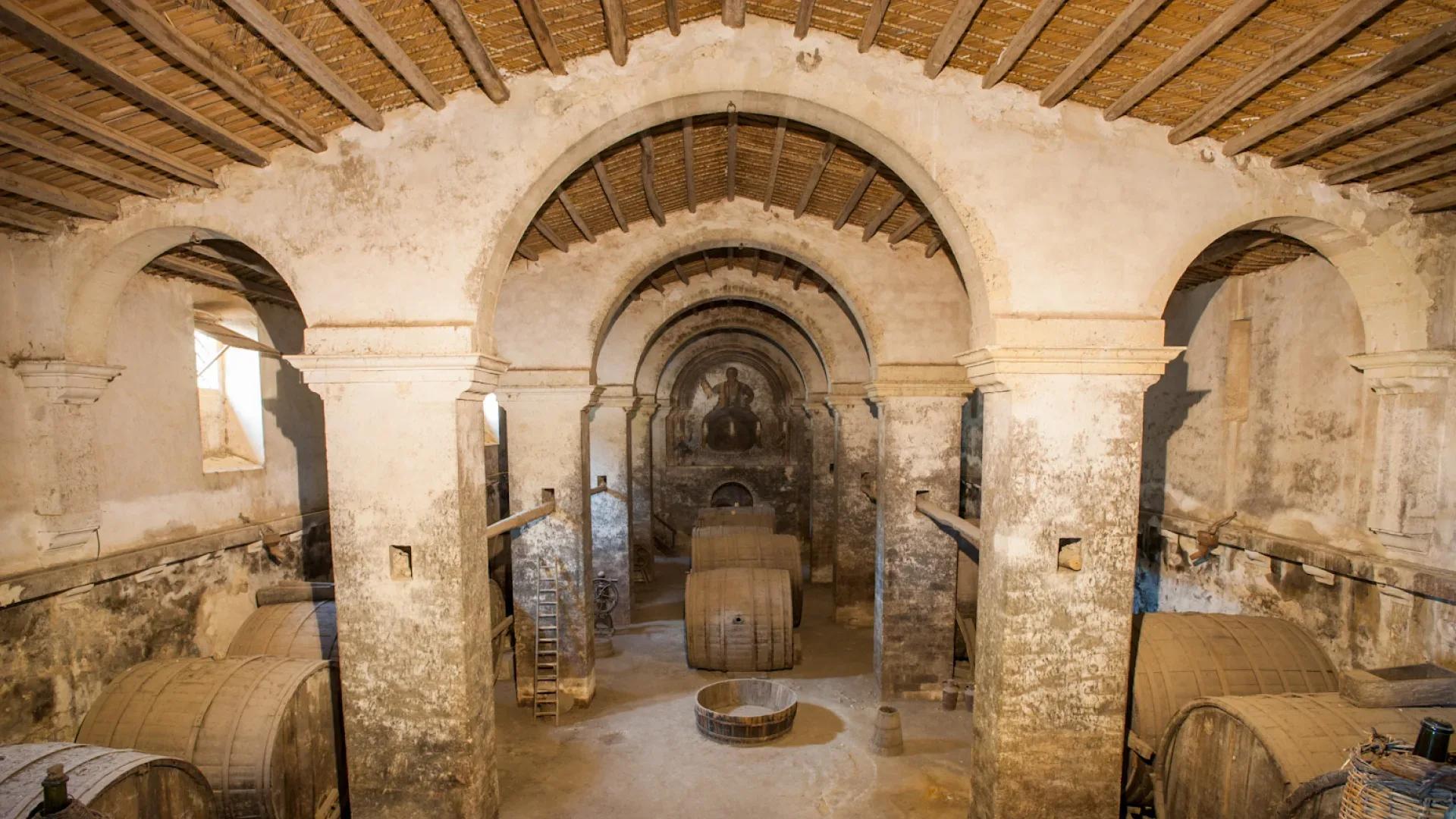
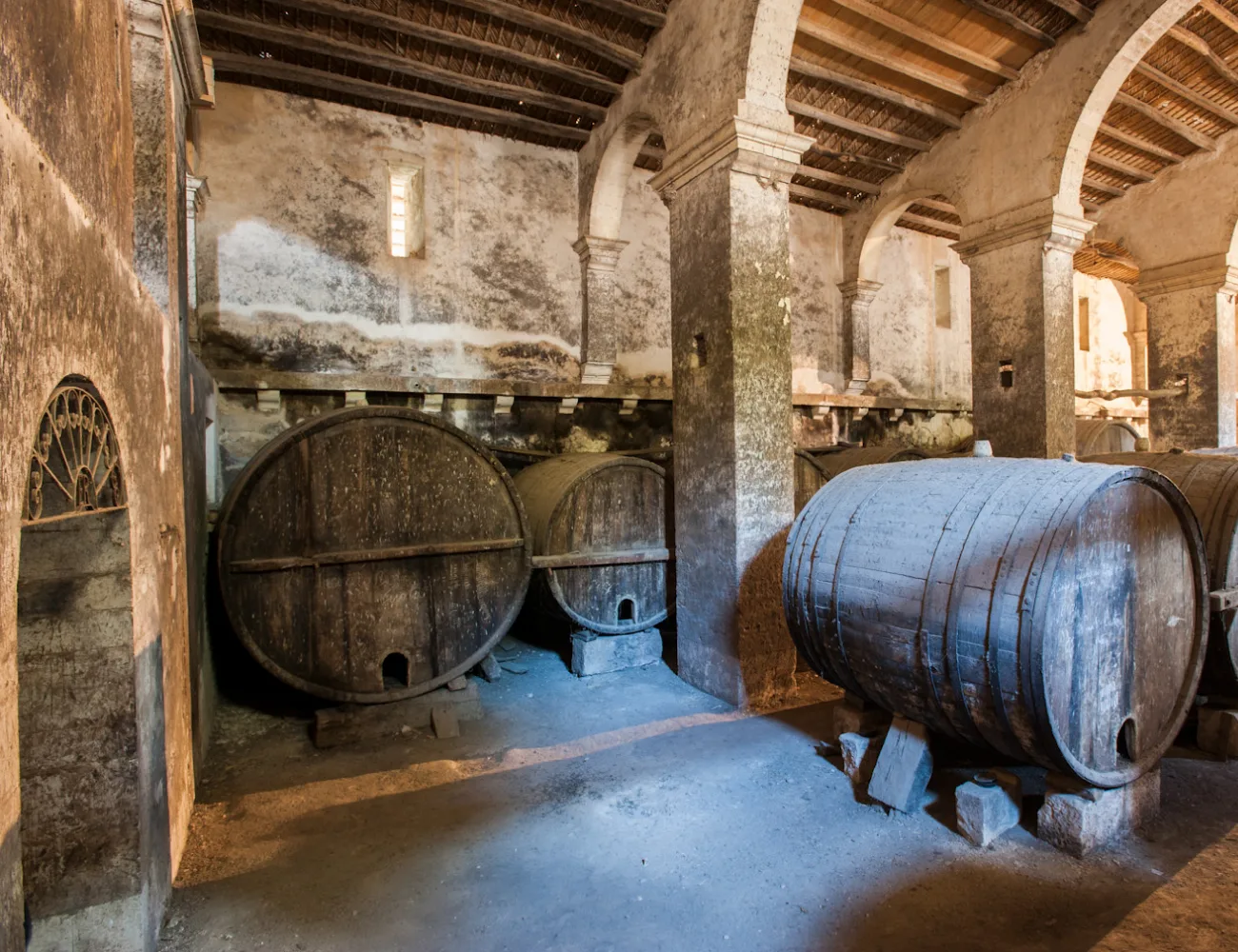
To the left, perpendicular to the palmento, is the cellar, of extraordinary grandeur and beauty.
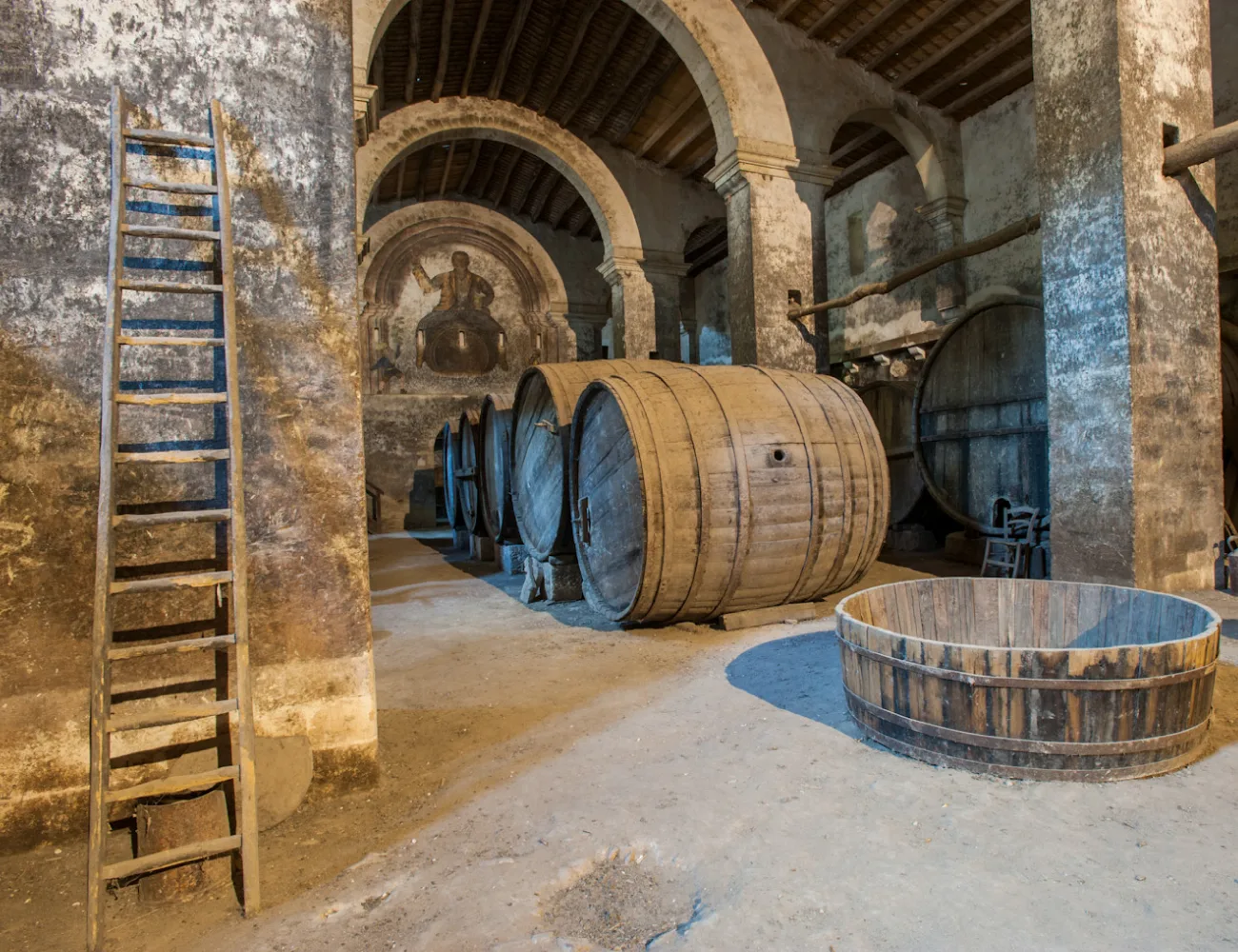
Huge barrels, the largest with a capacity of 150 hectoliters, find their place along the three aisles into which the space is divided and demonstrate the vastness of wine production at the time. A depiction of a man riding a barrel stands out on the back wall, likely a tribute to the owners of yesteryear.
Crusher
Already active in the first decades of the 19th century, as reflected in documents of the time, the oil mill fits into the original core around which the Fegotto business and complex developed.
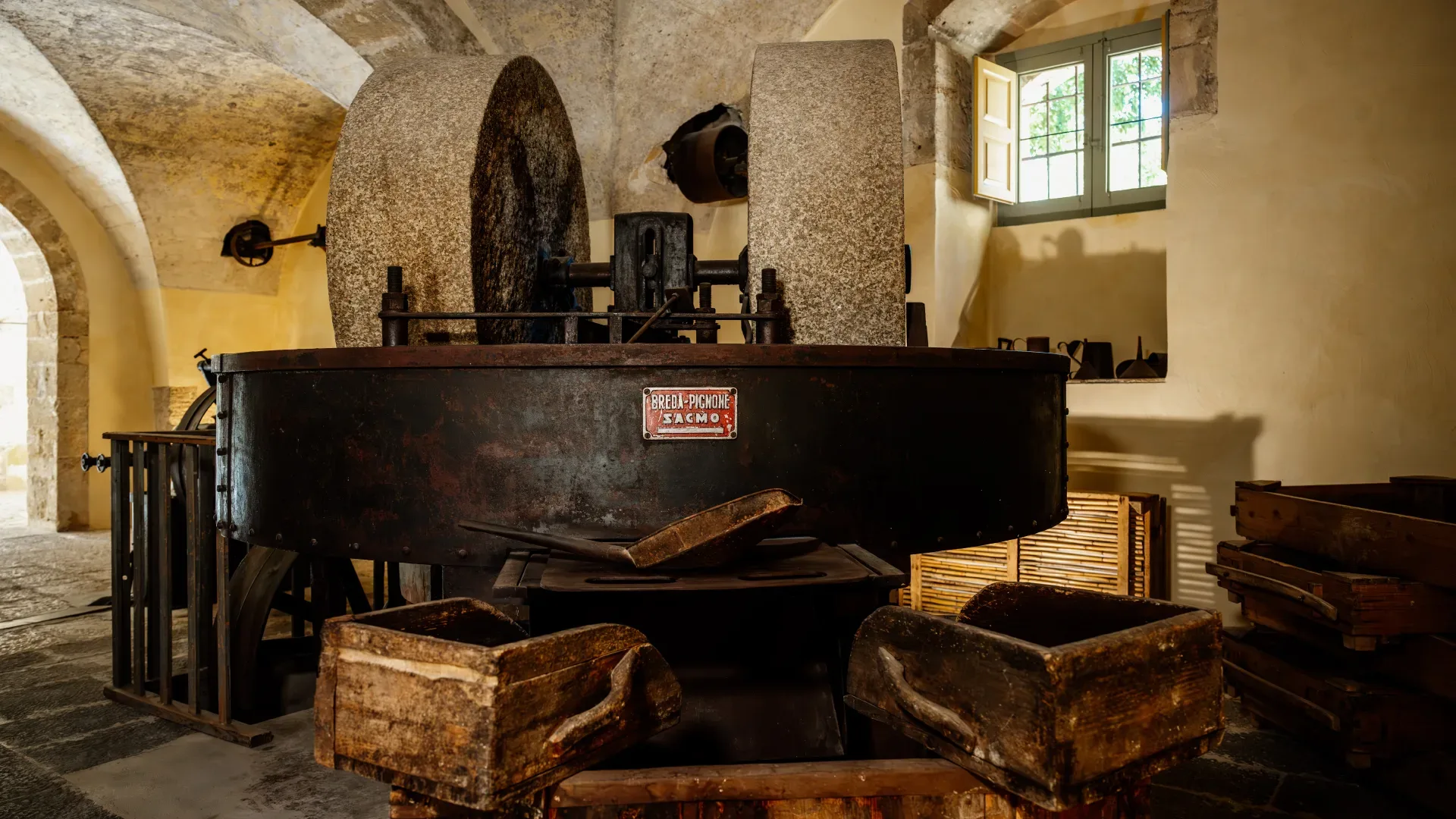
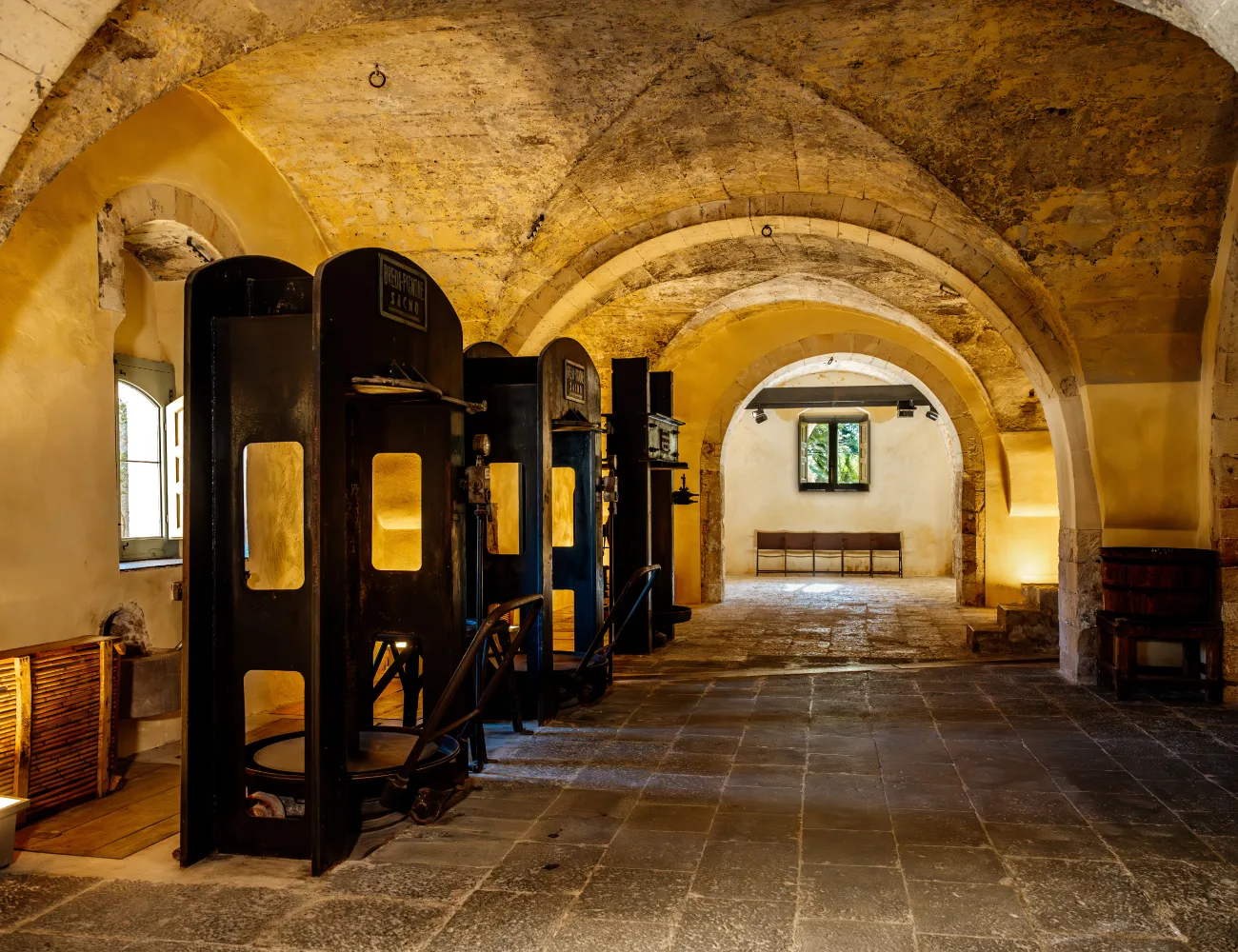
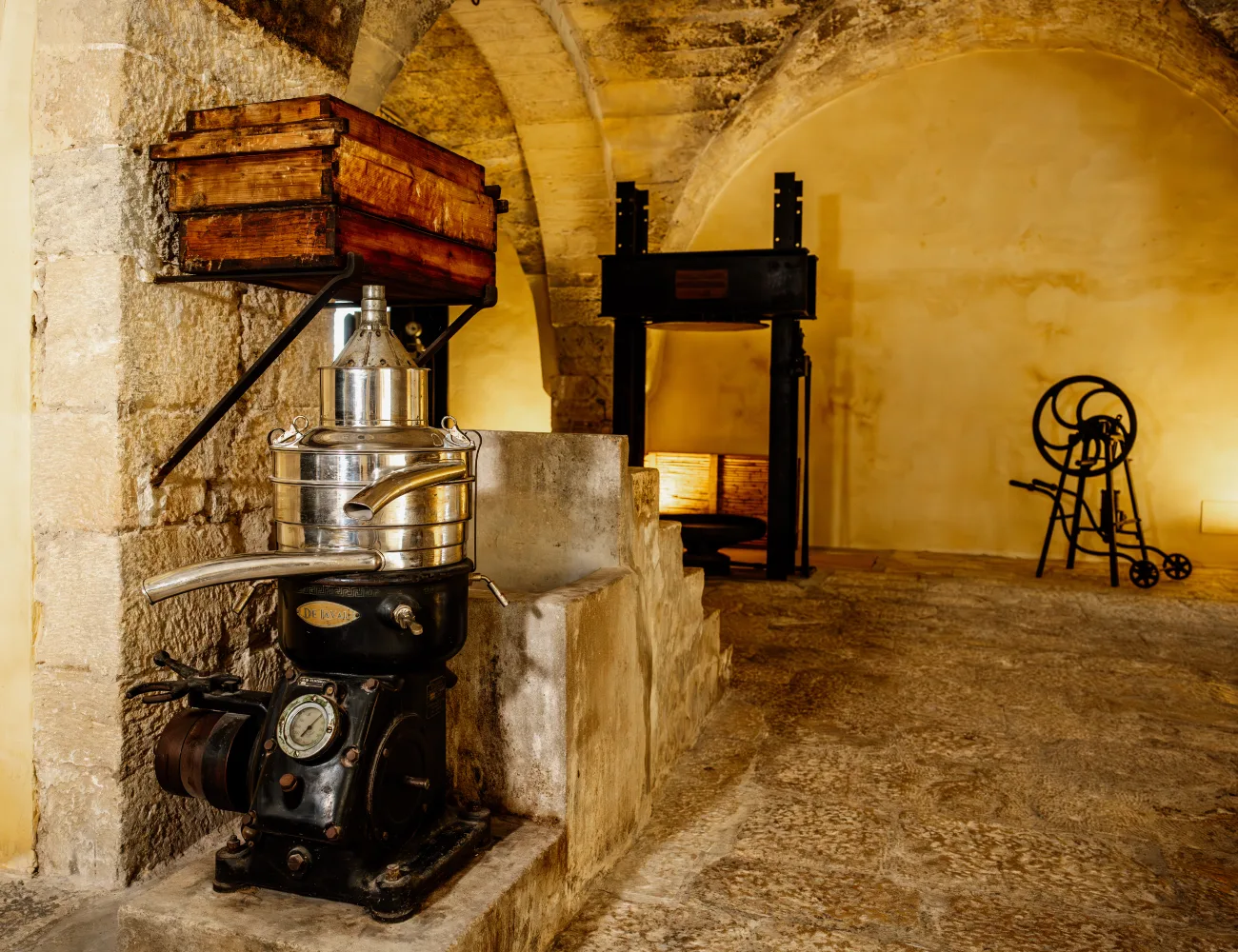
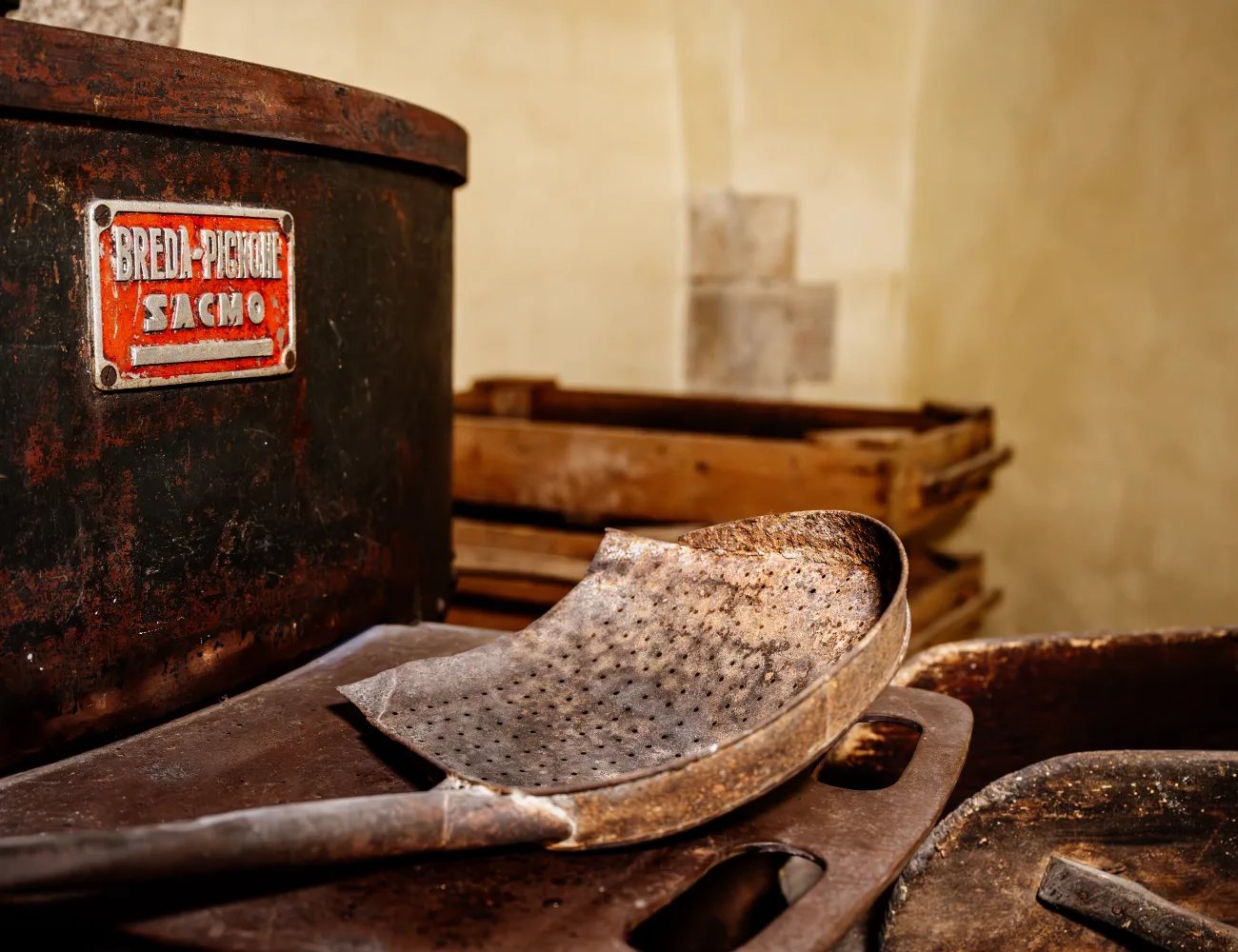
The environment is of special historical interest. Inside, traces of the evolution of olive oil production systems can be seen: from animal-drawn mill, screw press and decanting separator to motor-driven mill and Breda-Pignone hydraulic presses with Sacmo patent and centrifugal separator.
Progressive modernization indicative of managing production according to entrepreneurial criteria, with the continuous search for solutions that would ensure the efficiency of the production cycle and the quality of the product.
Granary
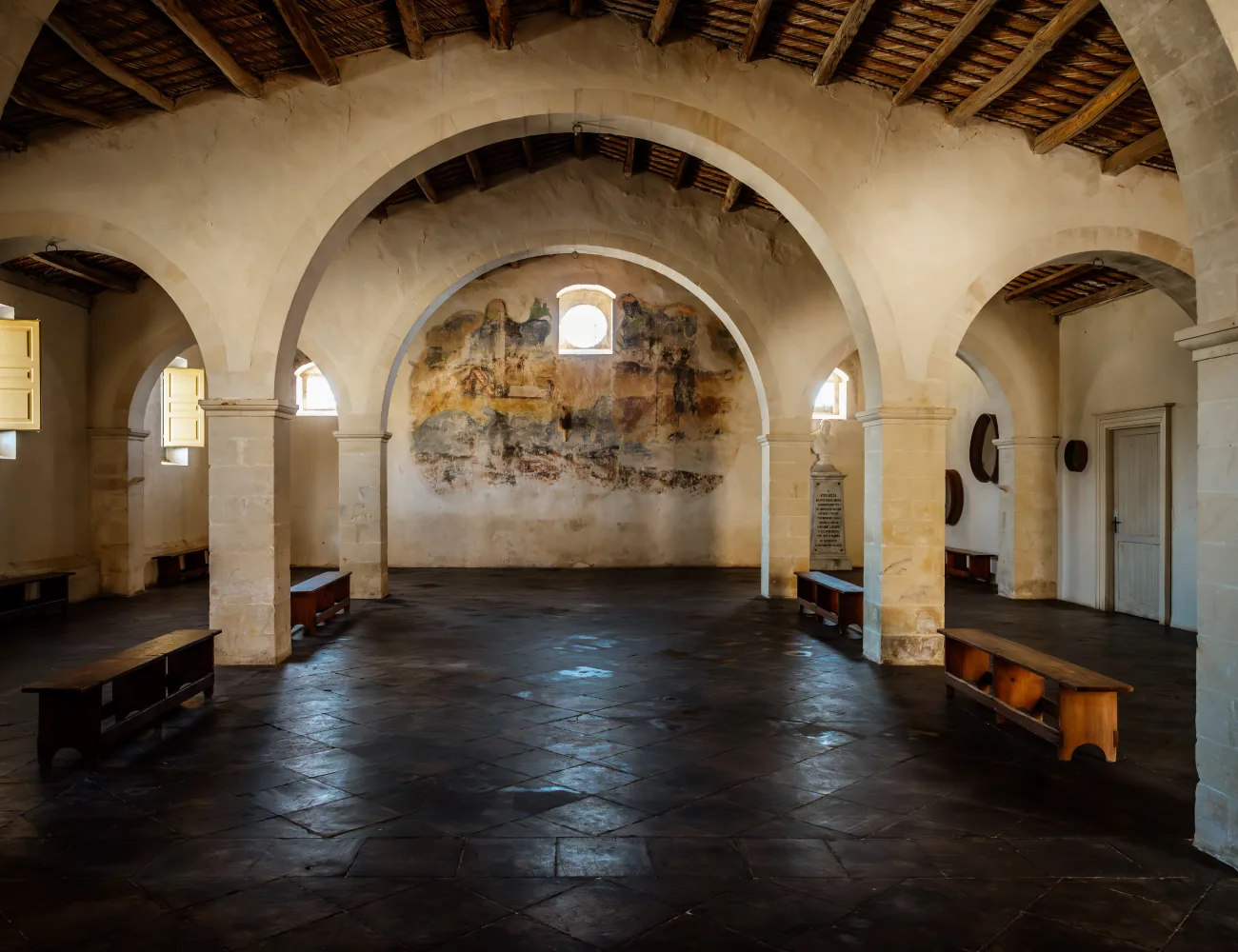
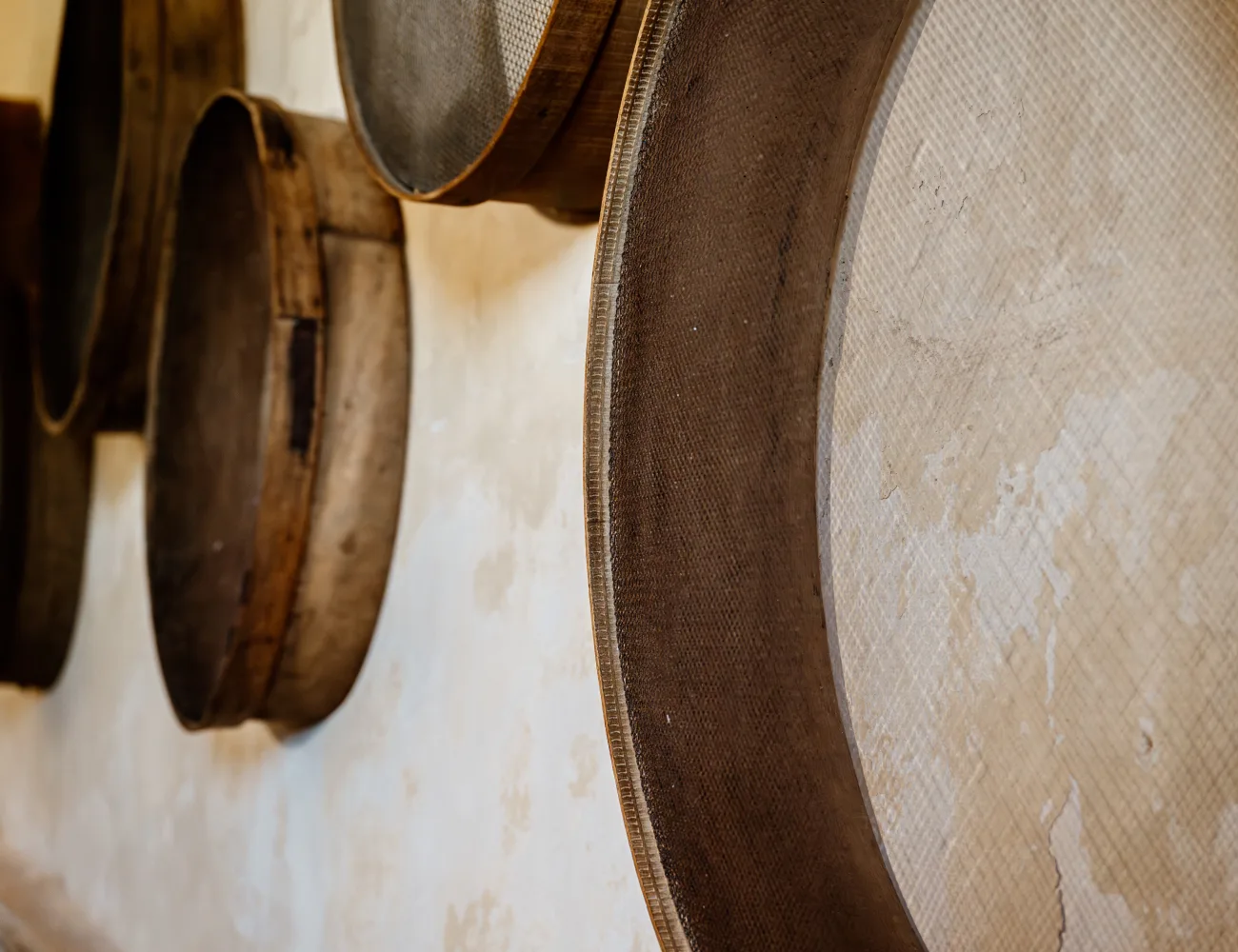
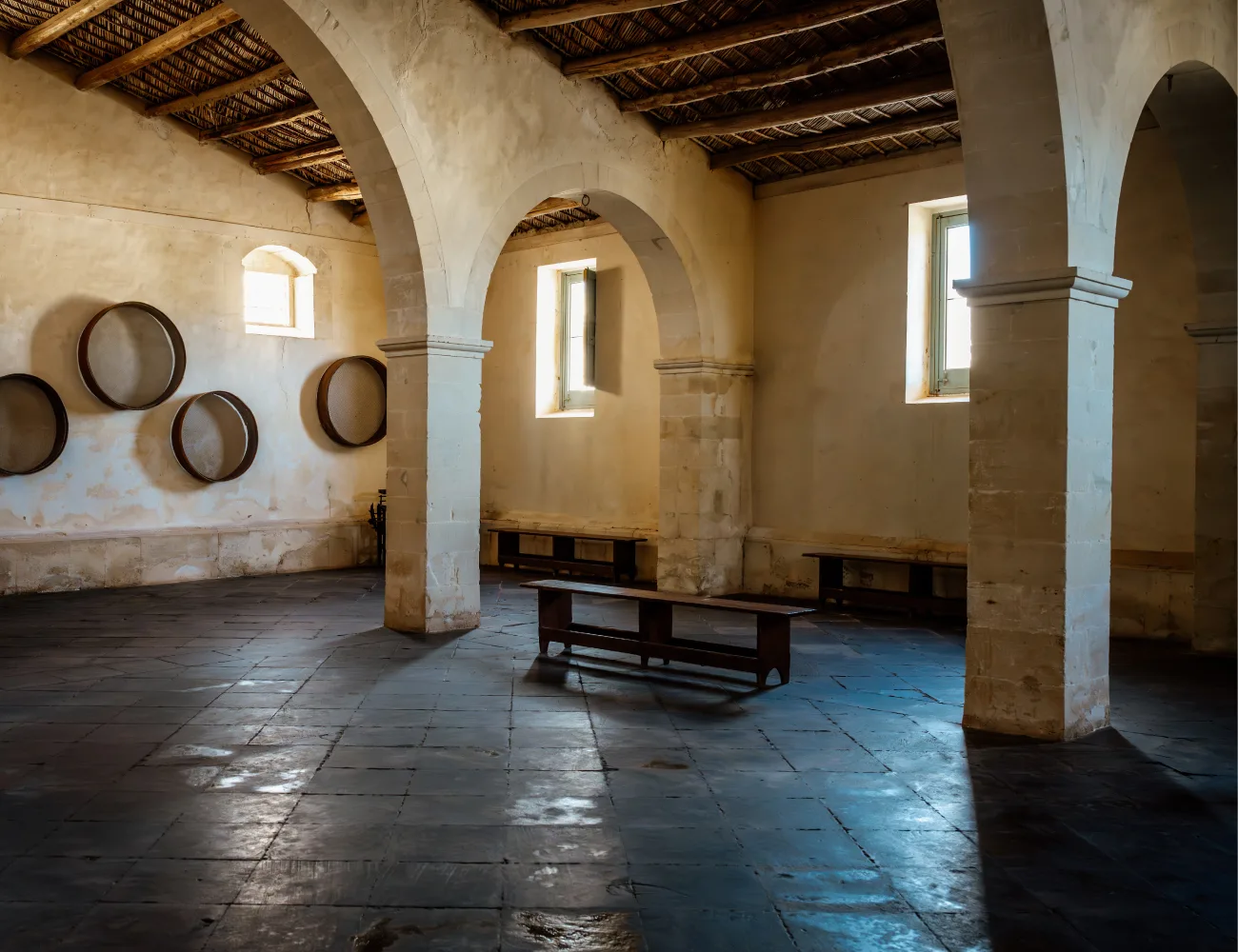
The three-aisle architecture, the pitch stone floor, and the mural painting on the back wall of the granary testify to the formal care devoted to the working environments as well, while tools of the time, such as sieves and grain measures, restore the material dimension of activities related to agricultural production.
Beams
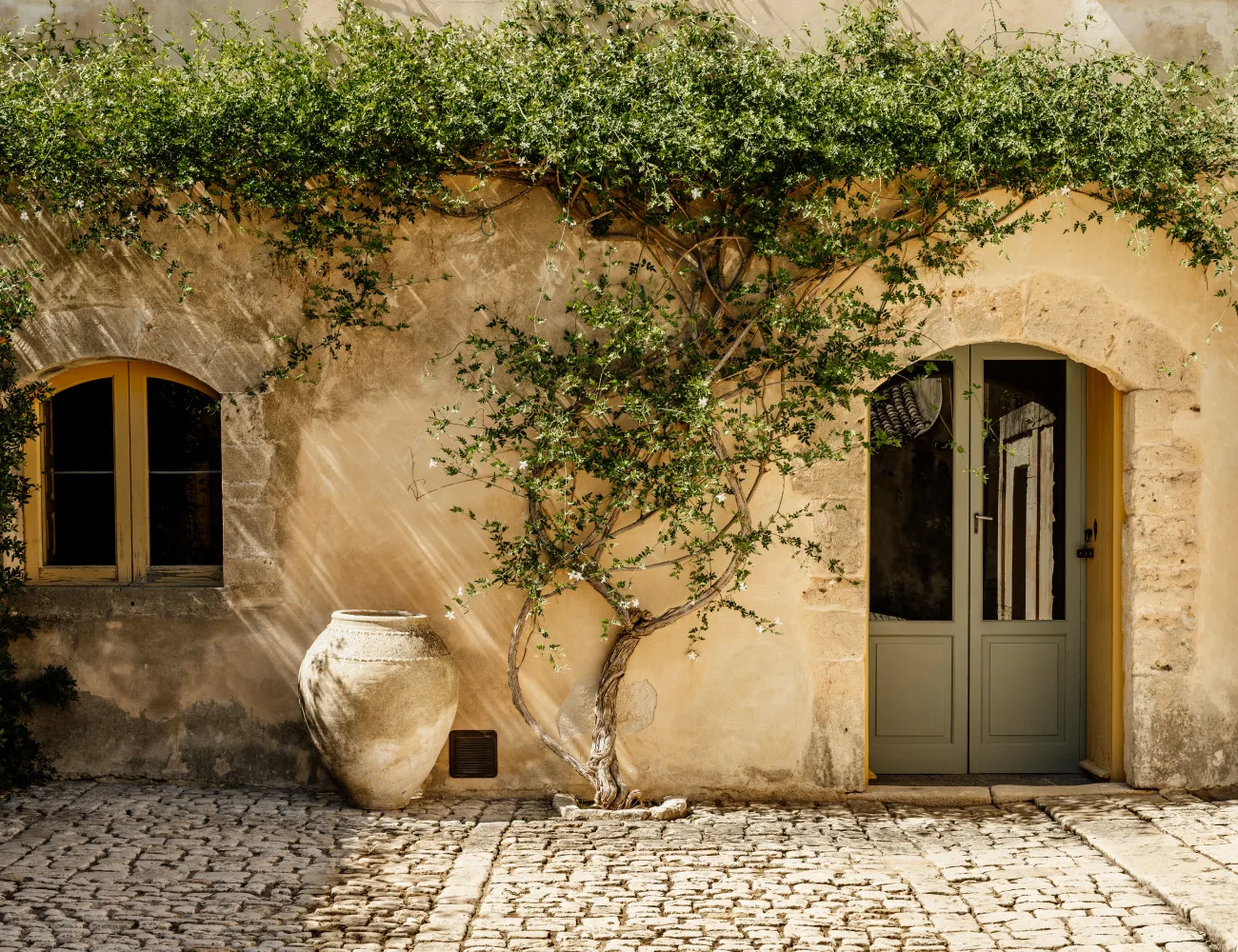
The buildings of which the Fegotto is composed rise around two large bagli (traditionally the courtyards of Sicilian masserie), where community life took place, from work activities to moments of meeting and socializing.
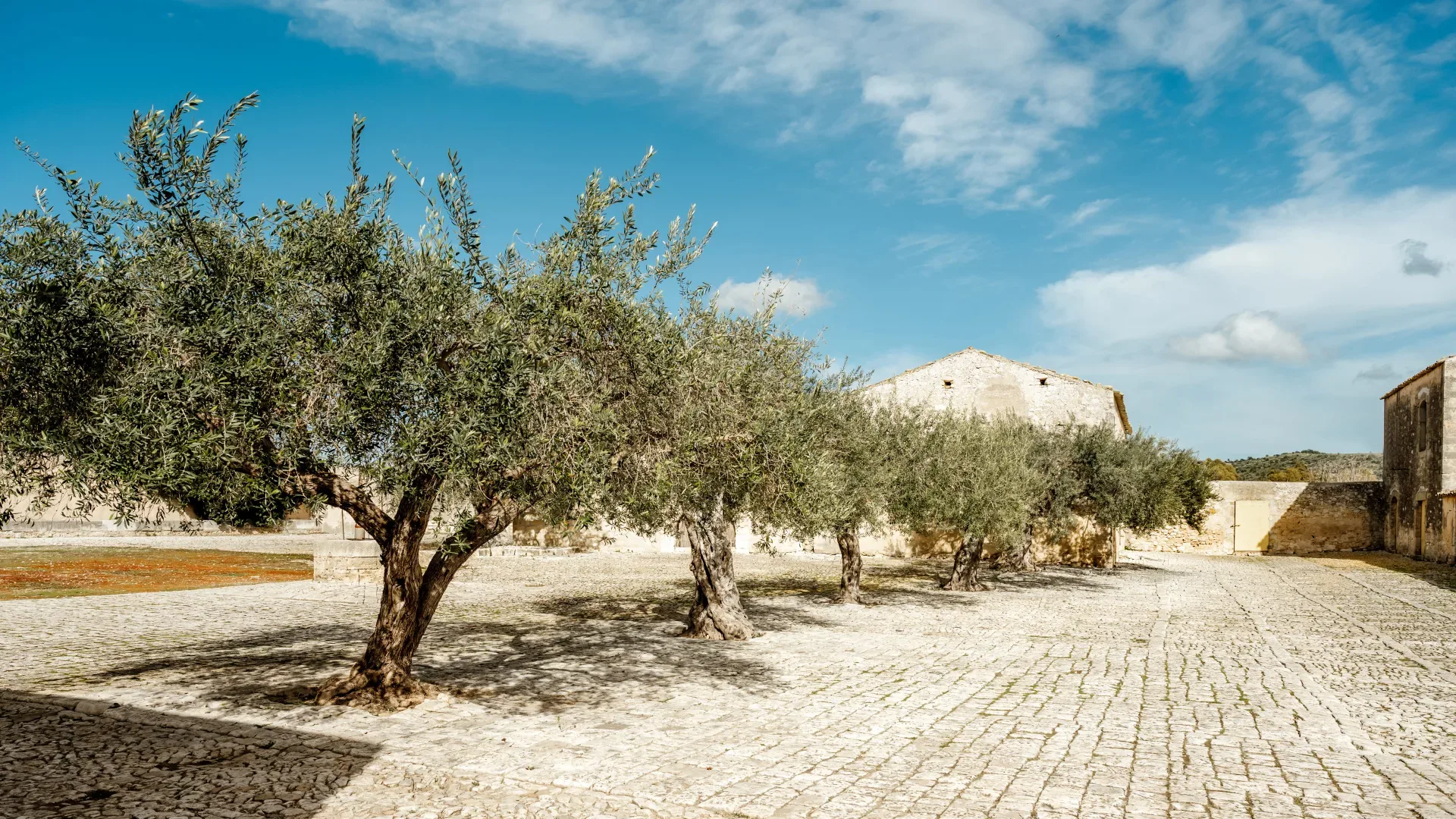
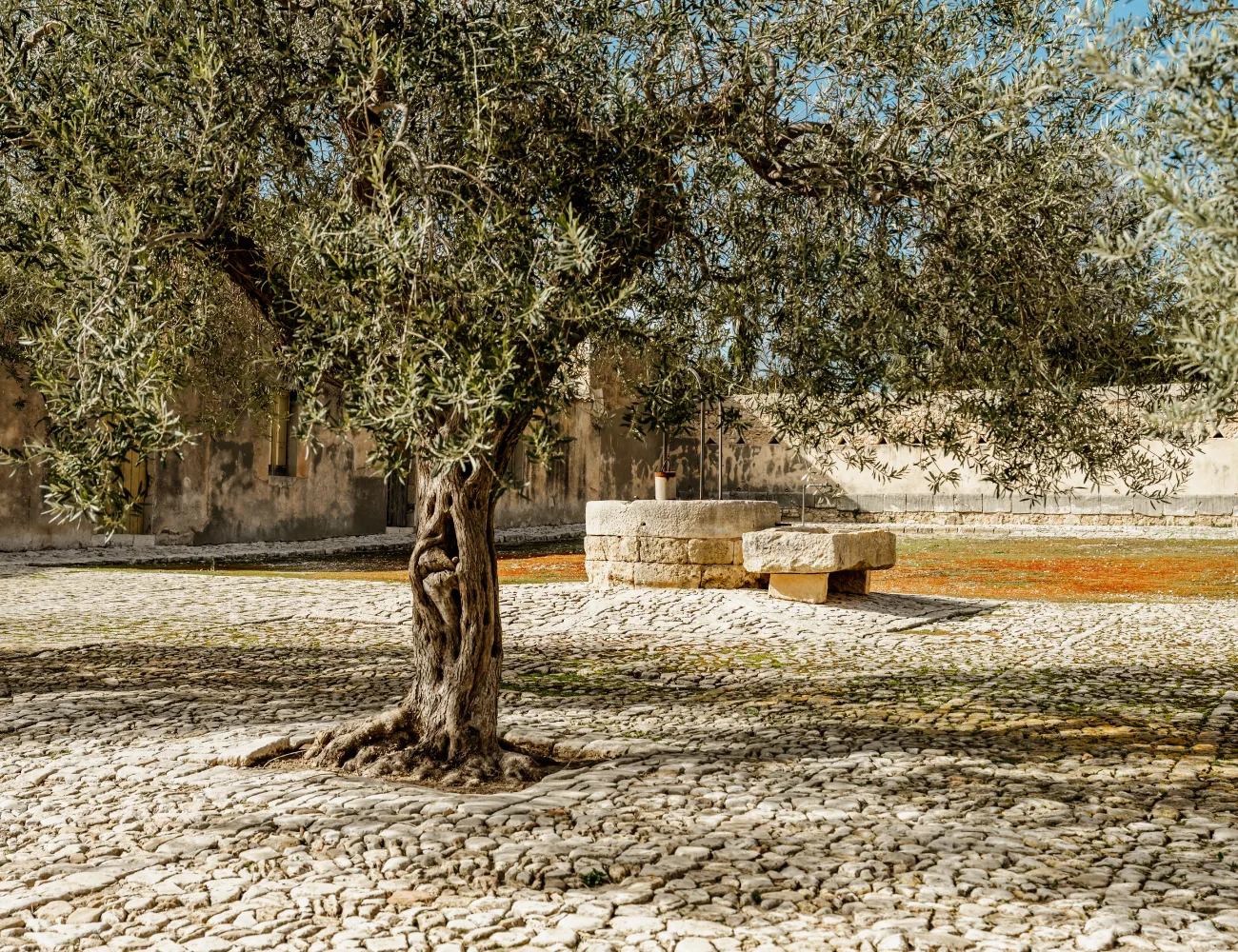
East of the manor house is the oldest courtyard, surrounded by stables and workshops such as carpentry, forge and saddlery, which made the farm self-sufficient. More purely intended for work than for social life, it retains a timeless charm, thanks in part to the beauty of the centuries-old olive trees that mark its expanse.
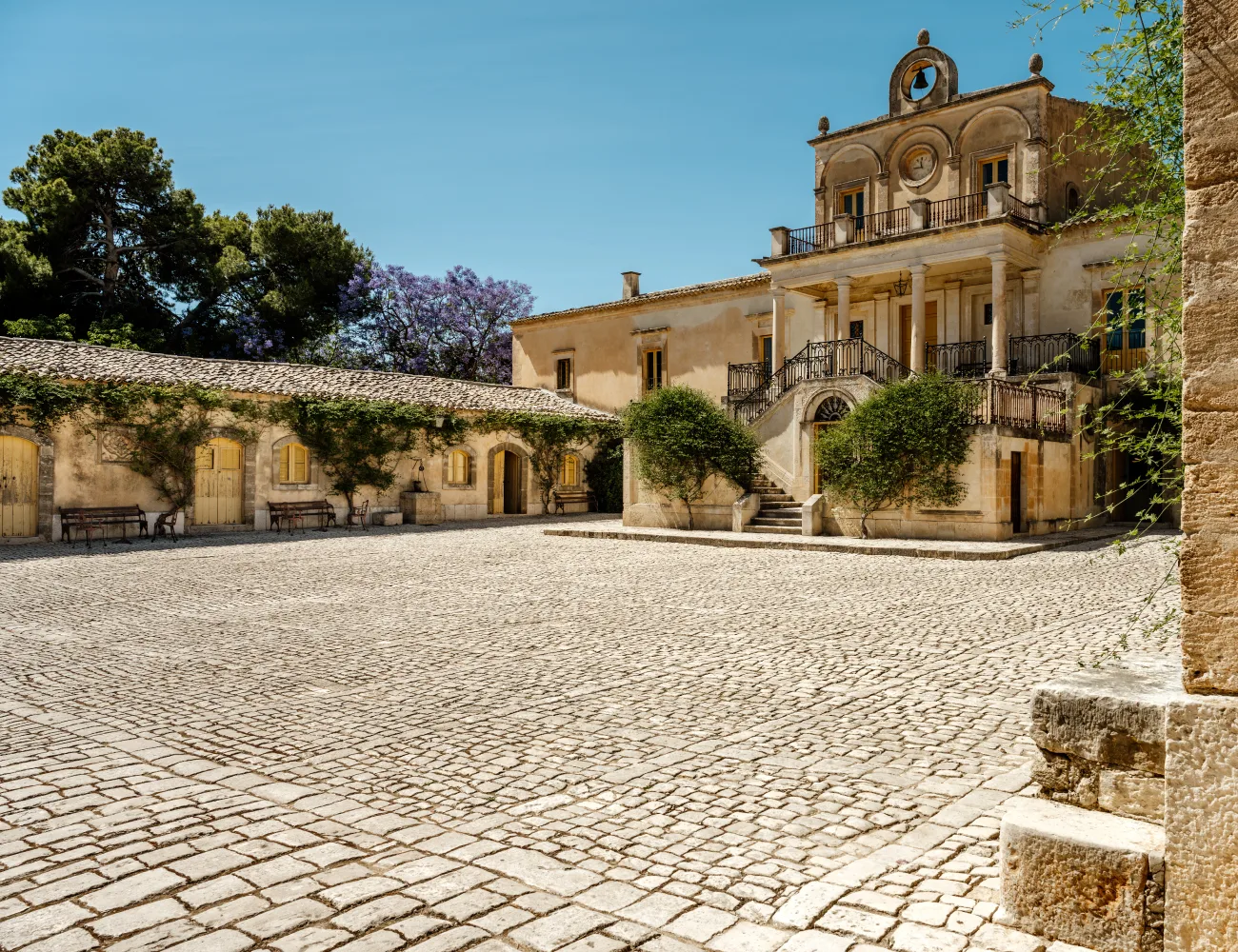
The main baglio, overlooked by the manor house and the church, is quadrangular in shape and bordered by symmetrical buildings once used as workers’ quarters. The original Comiso stone basalt paving reflects the sunlight, amplifying the sense of vastness and openness of the space.
Church
Among the environments most representative of Fegotto’s longstanding role in the Chiaramonte Gulfi area is the small church: not a private chapel for the family’s worship needs, but a parish church serving some twenty districts.
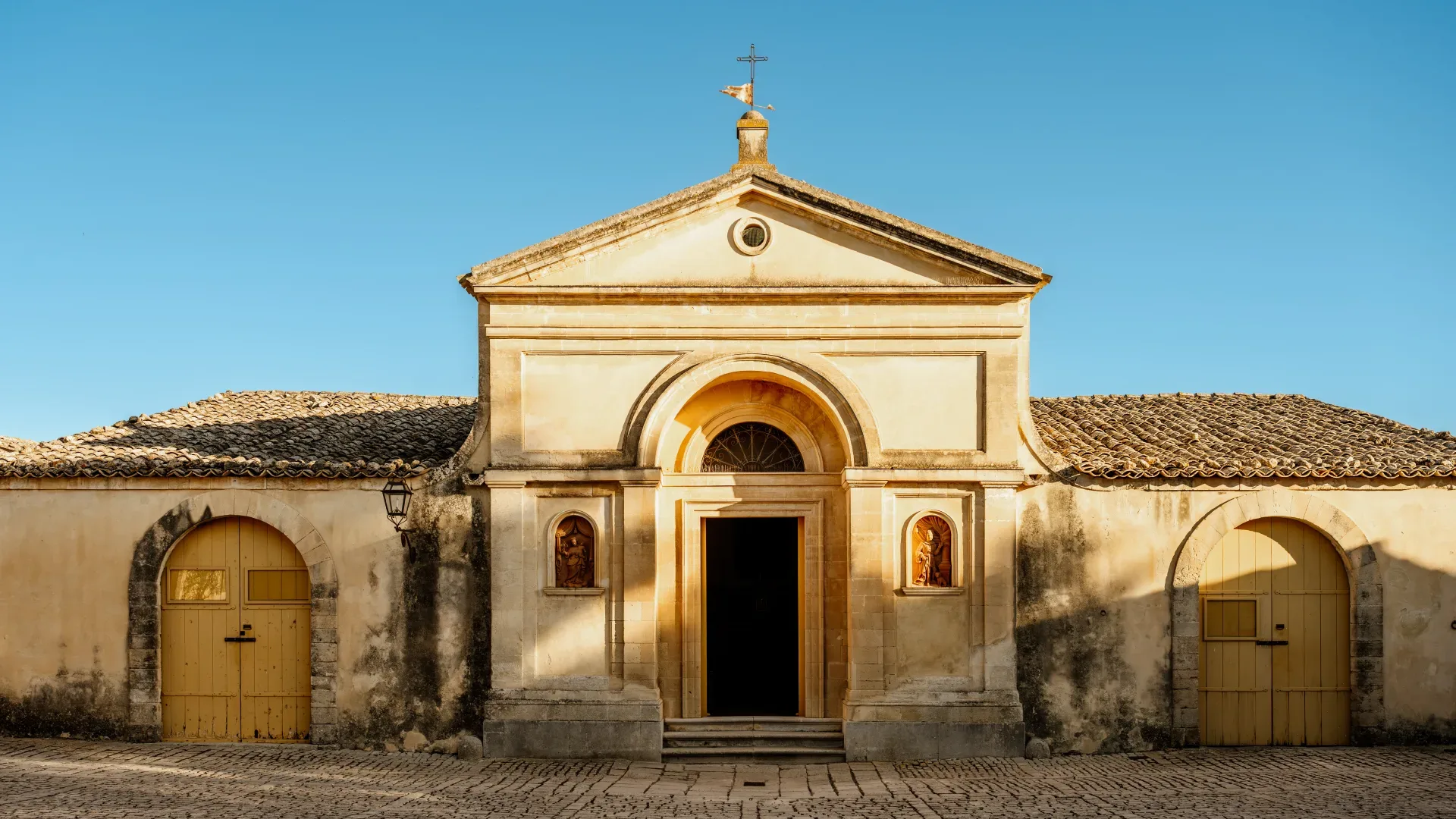
The neoclassical-style facade with its essential design and the single-nave interior express a sober and collected spirituality, far from the glitz of the neo-Baroque churches in the towns of the Val di Noto and more akin to the proactive and reserved nature of a rural community. The church is still consecrated and equipped with its original furnishings.
Manor House
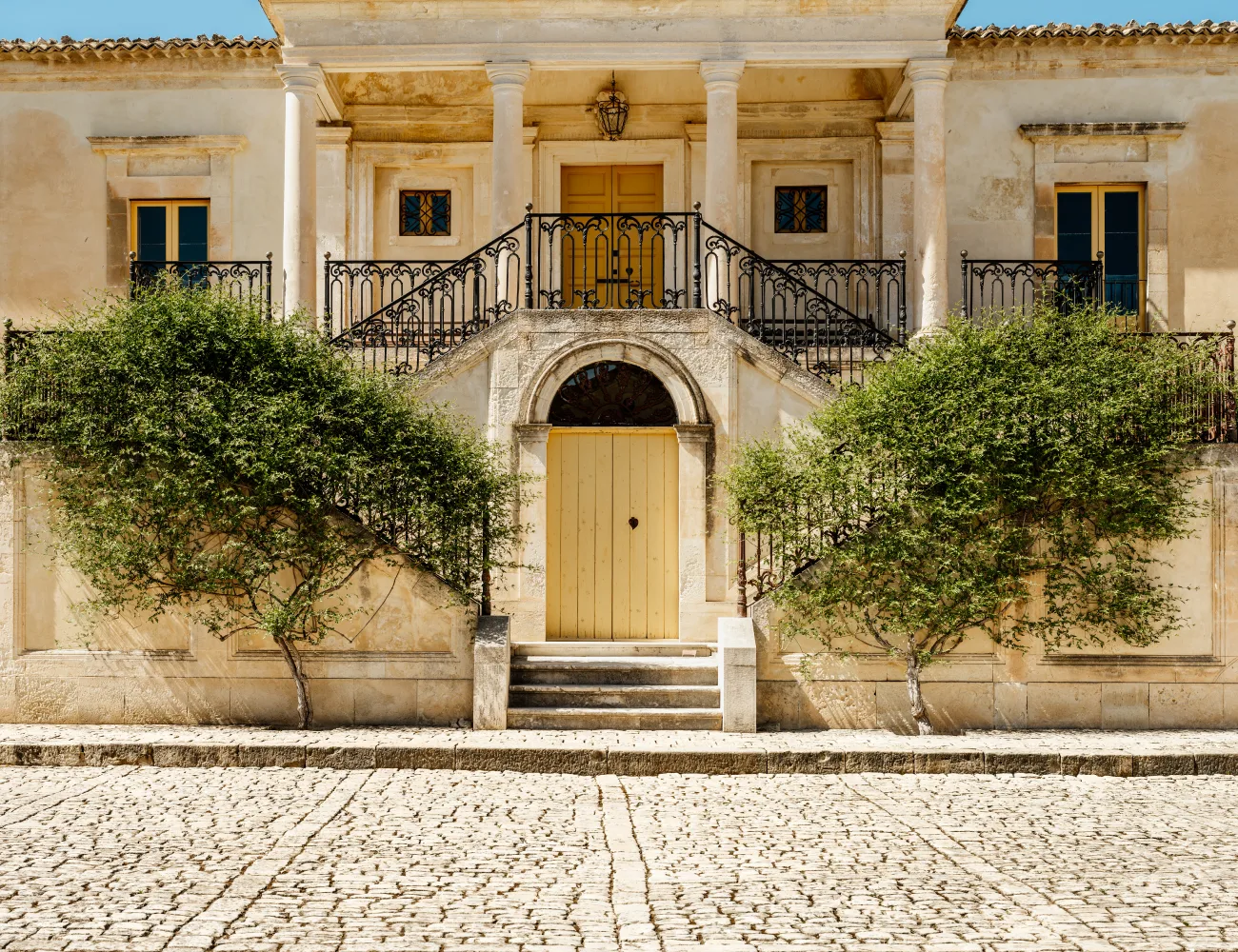
The imposing neoclassical-style elevation of the manor house, facing South, opens onto the main baglio, opposite the church. The baglio gives access to the first floor, which houses the old oil mill, while a wide, two-flight staircase leads to the main floor, used as the family residence.
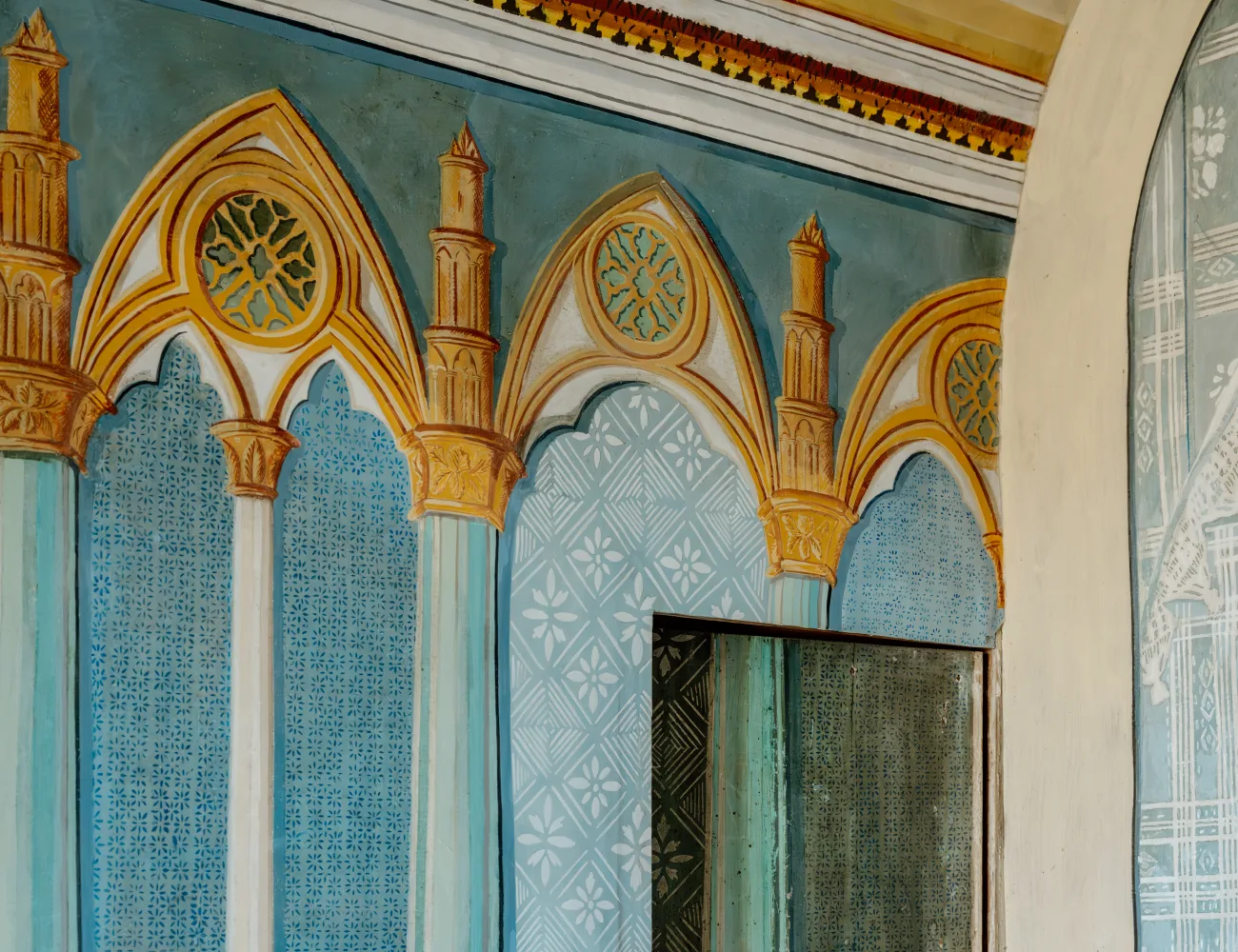
Here are numerous rooms used for different living purposes; finely decorated rooms that reflect the prosperity and taste of their ancient inhabitants.